Welcome to the Explora Lab: Where Ideas Take Flight!
Dream It. Build It. Test It.
The Maker Mindset: Our Philosophy
As an accredited International Baccalaureate (IB) school, our curriculum offers a holistic, concept-based learning framework that emphasizes inquiry, critical thinking, and international-mindedness across its various programs, including the Primary Years Programme (PYP) and the Middle Years Programme (MYP)
One key component of the MYP is the IB Design Process, a structured, cyclical approach comprising four stages: Inquire and Analyze, Develop Ideas, Create Solution, and Evaluate. This process guides students through problem-solving, emphasizing the journey over the final product. It encourages iteration and reflection, fostering practical skills, ethical thinking, and a deep understanding of real-world challenges. Ultimately, this approach contributes to an inclusive educational environment.
Design Thinking Process:
Ask: Define the problem or idea.
Imagine: Brainstorm solutions (no idea is a bad idea!).
Create: Build a prototype using materials.
Test & Refine: Identify what works and what needs improvement. Mistakes are a key part of the design process and encourage perseverance and iterative design.
Design and Innovation by Grade Level
Our newly opened Explora Lab on the San Pablo Campus expands EBI’s commitment to inquiry-driven, interdisciplinary learning. Designed to support the International Baccalaureate approach, this dedicated maker space allows students to engage deeply with the design cycle: asking questions, developing ideas, creating prototypes, and refining their work. The space enhances opportunities for innovation across grade levels and strengthens the connection between hands-on exploration and academic learning.
Open to all students in grades 2-8
Develop Creativity and out-of-the-box thinking.
Master Problem-Solving through design, iteration, and testing.
Acquire tech skills using tools such as 3D printers, coding kits, and electronics.
Experience STEAM concepts in a tangible, exciting way.
Collaborate with peers on ambitious projects.
Grades 2–4: Young Inventors (Focus on basic construction, simple circuits, and storytelling)
-
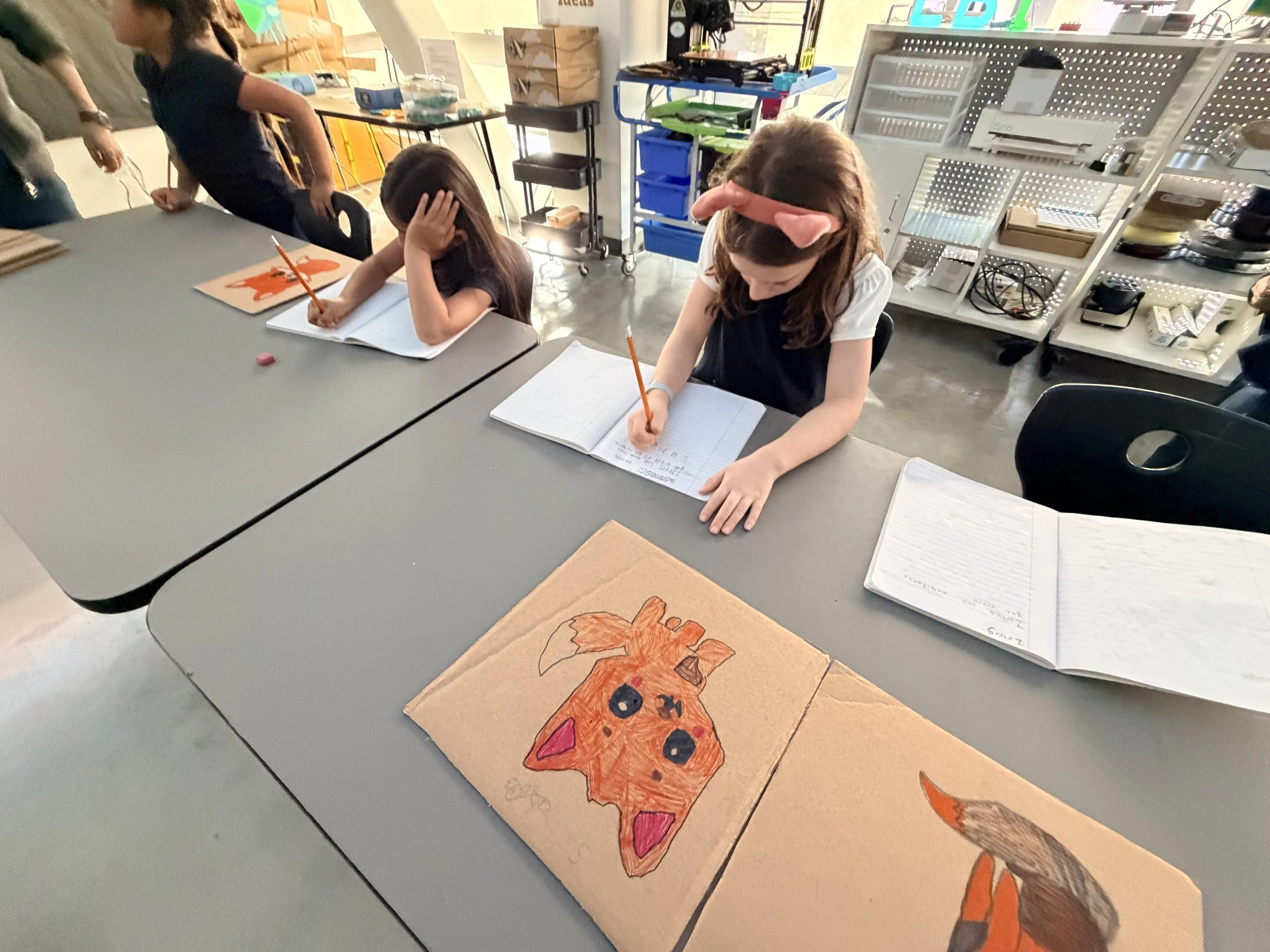
Using recycled materials (cardboard, plastic bottles, etc.) to build simple machines that move via levers or cranks.
-
Learning about electricity by creating light-up greeting cards or posters using copper tape and small LED lights.
-
Constructing a 3D scene from a book or historical event using craft materials, clay, and simple electronics.

Cross-Curricular Connections
At EBI, we understand the value of interdisciplinary projects in fostering a sense of community and collaboration among students. At the Explora Lab, we have been dedicated to creating an environment that encourages teamwork toward shared goals. For instance, our students worked together to design a fidget tool for the SEL department, recognizing the importance of supporting one another's well-being.
Additionally, our 6th graders took part in an engaging ecosystem design project during their science and design class, demonstrating their creativity and passion for the environment. We are proud of our teachers who continually collaborate throughout the year, building connections across different subjects to provide enriching experiences for all our students.
Grades 5–8: Innovators and Engineers (Focus on design thinking, coding, and fabrication)
-
Learning to use basic CAD software (like Tinkercad) to design and print personalized objects, prototypes, or mechanical parts.
-
Hands-on projects with kits like Micro: bit or Makey Makey to code blinking lights, simple games, or motorized devices (e.g., drones, spheros).
-
Designing videos to present their ideas, solutions, or points of interest.
-
Students have the opportunity to experience all the technology of the lab in just one elective class
-
This role is designed for students passionate about technology and eager to make a positive impact within our school community.
Our Tools and Tech
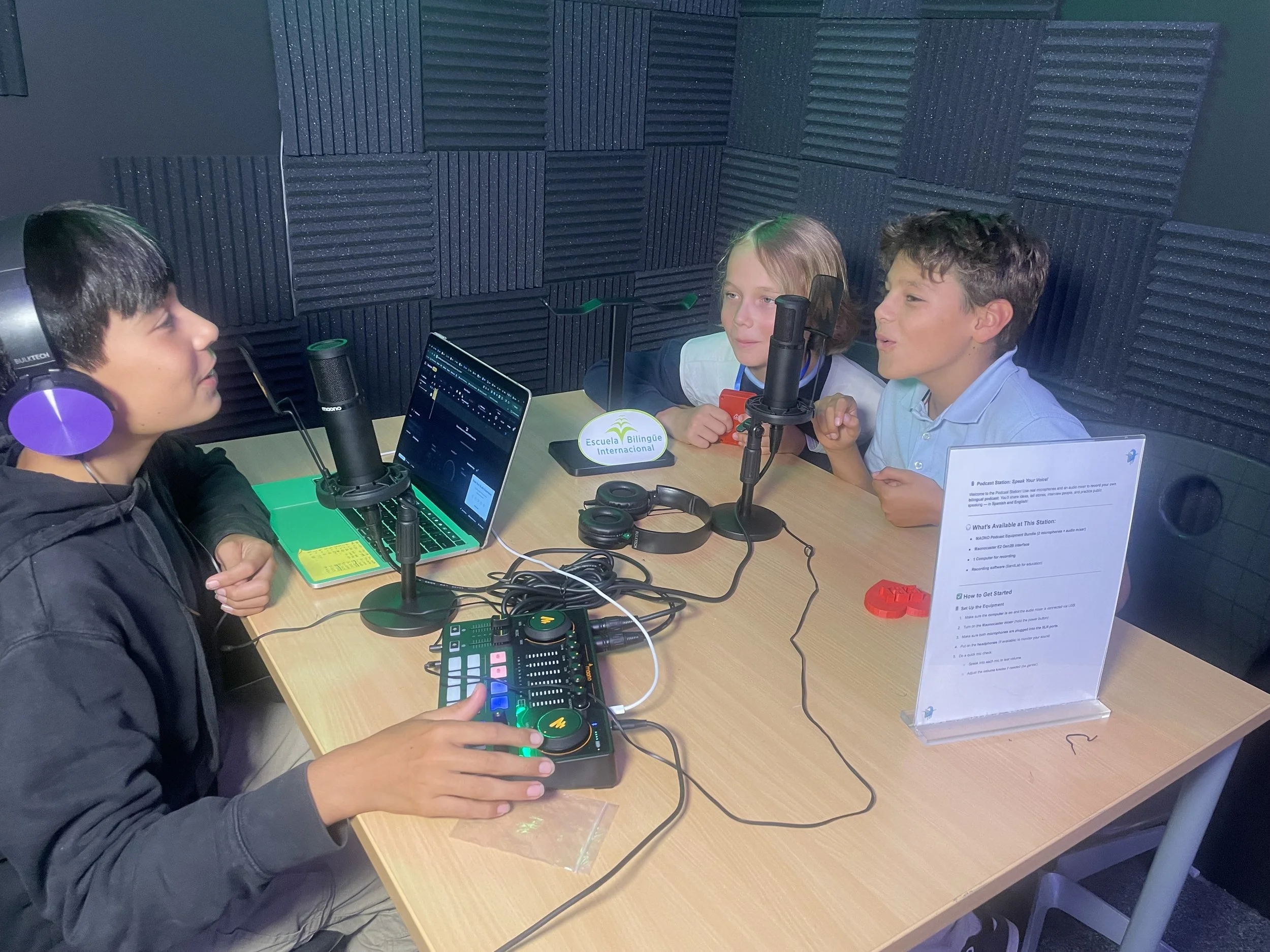
Video and Podcasting: Green screen, video cameras, and lights for video creation,
Podcast studio: Mics, mixer that will allow students to record their own podcasts
Computers and iPads with video editing applications.
Digital Fabrication
3D Printers: Turning digital designs into physical objects.
Laser Cutter/Engraver: Precise cutting for wood, acrylic, and cardboard.
Electronics & Coding
Circuit Kits (e.g., LittleBits, Snap Circuits): Easy-to-use magnetic components for instant electronic prototypes.
Microcontrollers (e.g., Makey, Makey, Micro: bit): The "brains" for coding interactive projects.
Minecraft for Education: A set of Chromebooks for Minecraft promotes vital academic and life skills by enhancing creativity, critical thinking, problem-solving, and digital literacy through interactive, collaborative, and engaging gameplay.
Building & Crafting
Chopsaw: cardboard cutter, screwdrivers, and screws.
Sawing Machine: Easy and safe to use by students of all grades
Screen Printing: a hands-on activity to design and bring an idea to life.
Materials Library: A constantly evolving collection of recycled materials, cardboard, and craft supplies.